2

In Newtonian mechanics all inertial reference frames follow the same laws of physics. Why does this break down for acceleration. In a rocket you feel acceleration because the rocket is accelerating but everything inside is staying at the same speed so it looks like there is a force pushing it back.

But if everything in the rocket is equally accelerated, let's say because the rocket is charged including all of the inside, so that the rocket doesn't push on anything and it is accelerating towards a much larger opposite charge, how can you tell you're accelerating, it will just look like the earth is accelerating away from you

Is there some mathematical way of showing from both reference frames that it will look like you are the one being accelerated? What would the path of constant acceleration look like if the speed of light is constant? And is there a Lorentz transform for acceleration, or even a general Lorentz transform for a more complicated motion?

Qmechanic
  • 220,844

6 Answers6

3

You're correct - if every single particle that you have access to experiences the exact same acceleration, then you have no way to do detect that you're accelerating, even in principle. In practice, gravitational fields are the only way to arrange for this to happen.

Every time you literally feel acceleration, it's because different parts of your body are experiencing slightly different instantaneous accelerations, so your body is experiencing internal forces.

tparker
  • 51,104
2

How can one tell they are accelerating

Drop a ball [or as @Dale said, use an accelerometer... a ball on a spring or set of springs].

(As @m4r35n357 commented, this issue is primarily a [Galilean] Principle of Relativity question... having little to do with any special relativistic features.)


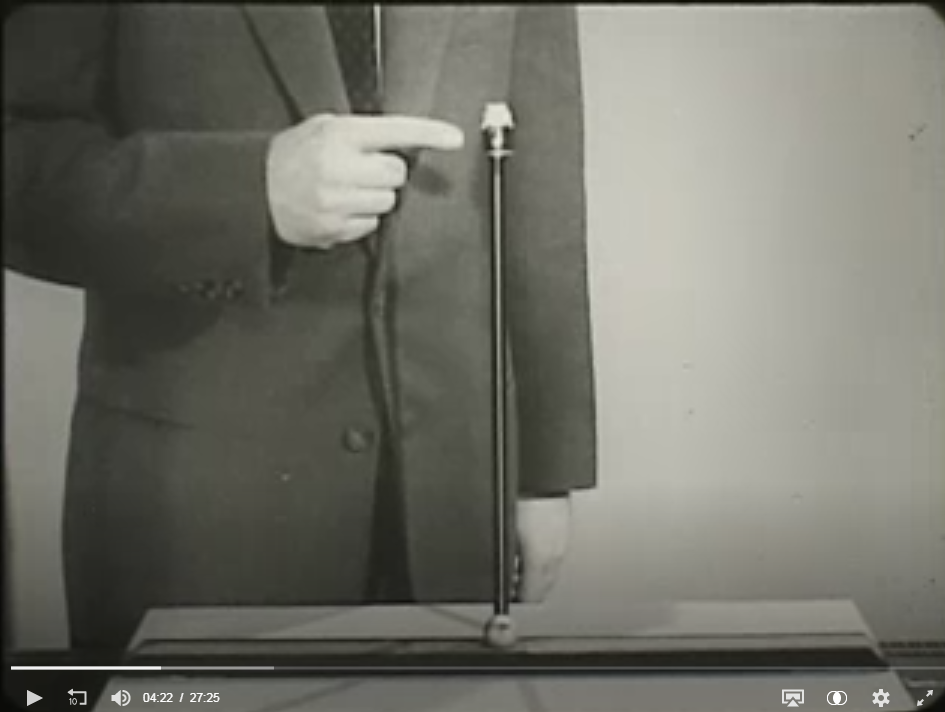
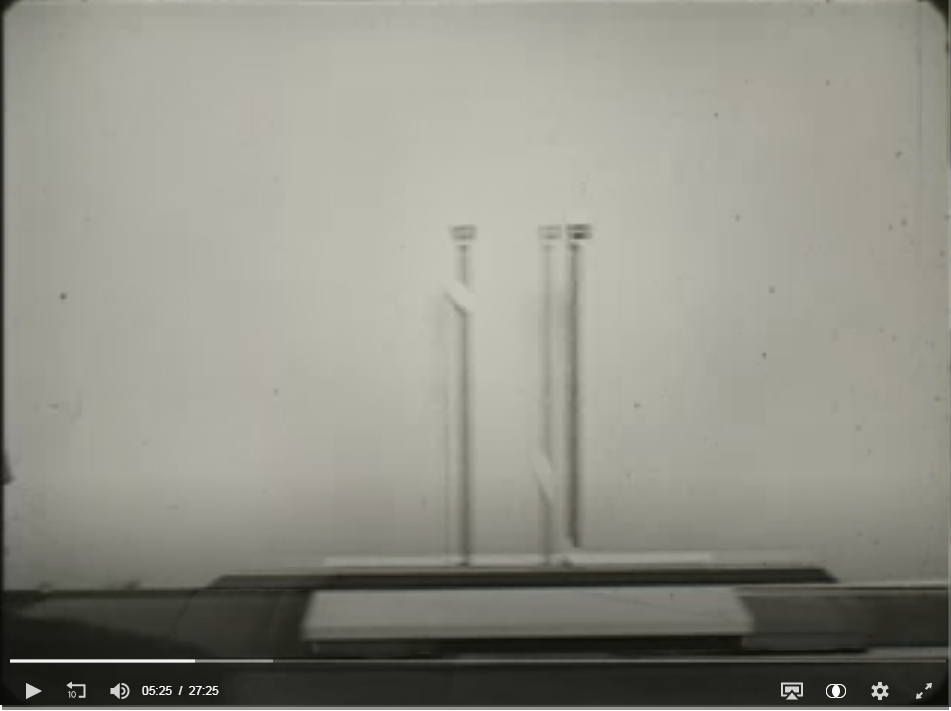
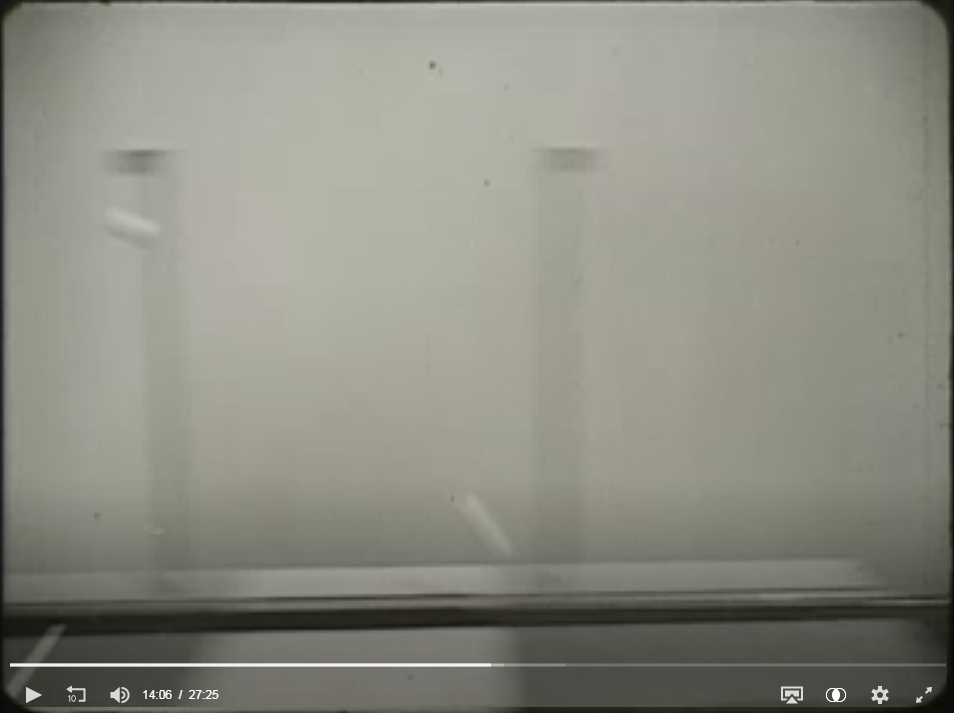
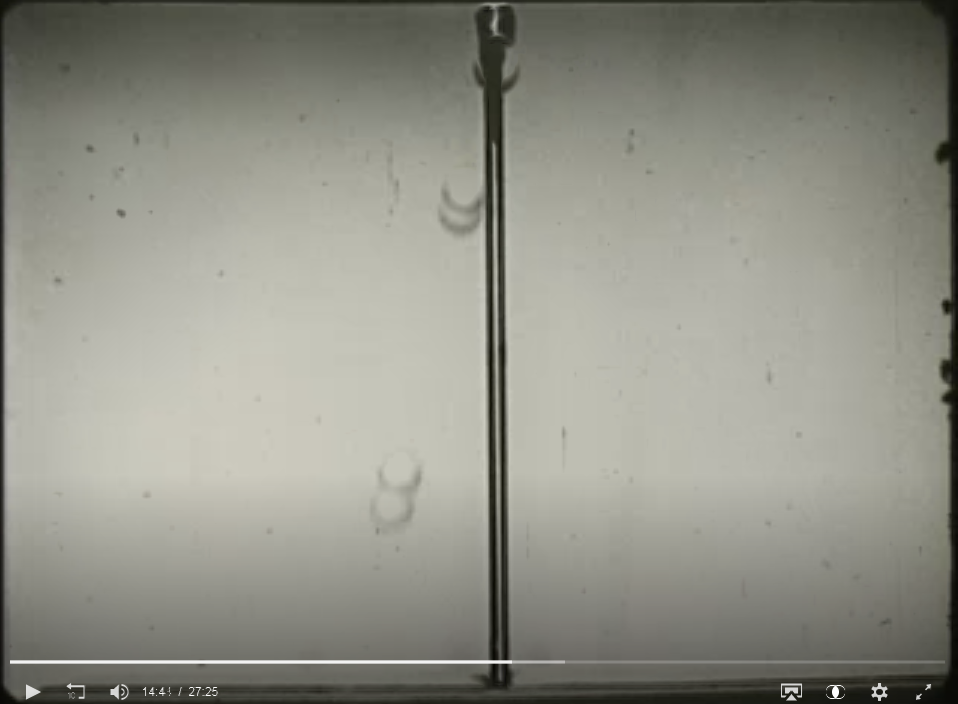
Here are a few frames (superimposed) from
Ivey and Hume's Frames of Reference video
https://archive.org/details/frames_of_reference

(You can probably find it on YouTube [with slightly different timestamps]. However, this archive.org URL should be more permanent than YouTube.)


Inertial

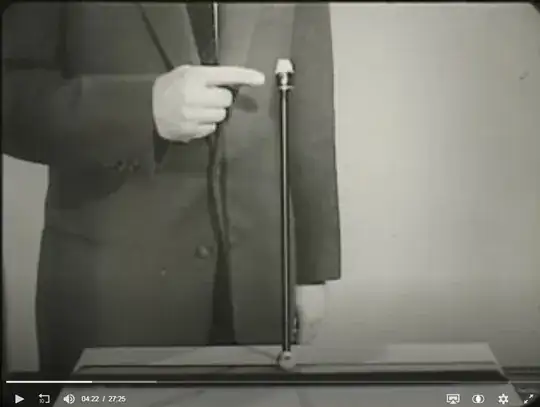
At t=4m22s , this is a ball dropped from a cart at rest in the inertial-Lab frame.
When released, there is no horizontal force on the ball, hence it has constant horizontal velocity in the Lab.
It lands at the base of the stand. IveyHume-InertialAtRest-viewedInLab
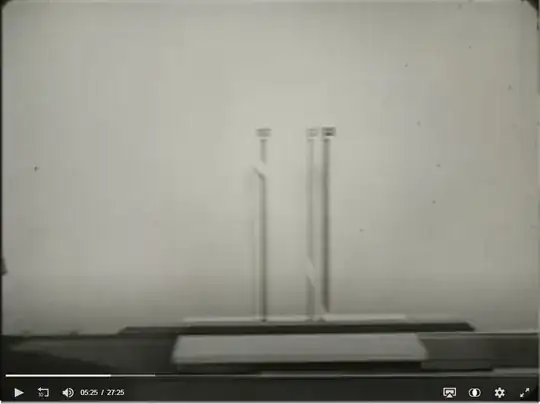
At t=5m25s , this is a ball dropped from a cart in uniform motion in the inertial-Lab frame.
When released, there is no horizontal force on the ball, hence it has constant horizontal velocity.
It lands at the base of the stand.... just like it was at rest-and-inertial. IveyHume-InertialInMotion-viewedInLab

Accelerated

At t=14m06s , this is a ball dropped from a cart in accelerated motion in the inertial-Lab frame, viewed from the Lab.
When released, there is no horizontal force on the ball, hence it has constant horizontal velocity.
It lands behind the base of the stand [since the cart has sped up due to its acceleration]. IveyHume-Accelerated-viewedInLab

At t=14m33s , this is a ball dropped from a cart in accelerated motion in the inertial-Lab frame, viewed from the nonInertial-Cart frame.
When released, there is no horizontal force on the ball in the inertial-Lab frame, hence it has constant horizontal velocity in the inertial-Lab frame.
It lands behind the base of the stand. IveyHume-Accelerated-viewedInCart
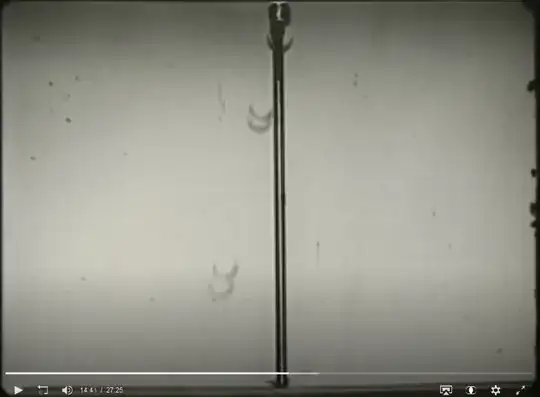

So, the accelerated observer can tell he or she is accelerating because the ball did not land at the base, as it would for an inertial observer (whether at rest or in motion).

An accelerated observer [boxed up in his or her frame] would not be able to use the same laws of physics written down by an inertial observer to describe the situation. Some "fictitious" force would have to be inserted to "explain" the result.


From the OP,

But if everything in the rocket is equally accelerated,

I would say that this experiment shows that not everything is equally accelerated. If you deny the use of this or similar experiments (that is, to choose not to look at something), then [it seems to me that] your question is really asking "What can I conclude from an incomplete set of experiments?".

robphy
  • 12,829
1

Consider a more mundane example: You are inside a car in the passenger seat. The driver stomps on the gas pedal and the car accelerates. You also accelerate, but that is because there is a force applied to you. F = m a. What force? You feel yourself pushed into the back of your seat because the back of your seat is applying a force to your body, which is just enough to give you the same acceleration as the car. If you like, you could put a bathroom scale between you and the seat and read the force out in pounds.

1

Actually relativity postulates do not break down with acceleration. While in an accelerating capsule, there is no test you can do that will tell you it is acceleration, and not gravity pushing you against the capsule. This is why all reference frames are equally valid. In your frame of reference, there is no definitive proof that it is not gravity pushing you against the capsule, with everything else accelerating past you. In the case of gravity accelerating you and your capsule equally, so you are in freefall inside it, you can still see yourself as sitting still with everything else accelerating past you. There is no absolute frame of reference, all are equally valid.

1

In a non-inertial reference frame Newton's laws no longer hold. So, for example, if you see an object accelerating relative to you without a force acting on it, then you know you are not in an inertial reference frame.

In your accelerating rocket example, just throw a ball. Since it no longer has forces acting on it to keep it at rest relative you, it will look like it suddenly accelerates without any forces acting on it. You can conclude you must be accelerating.

Of course, this could also mean you are just in a gravitational field, but other answers here have already discussed this, so I won't get into it here.

BioPhysicist
  • 59,060
0

Gravity is the only force that affects all particles the same.

Suppose you were in a rocket that was launched from Earth not with its engines, but from a cannon, like in Jules Verne's From the Earth to the Moon. After launch, you would be coasting upward. Earth's gravity would slow you and the rocket equally. The rocket would not accelerate you. You would feel no force. You would be in free fall.

If you looked out the window, you could see the Earth accelerate. But if you did not, there is no way you could detect that you are accelerated. It would be the same as if you were in a rocket far from Earth, with no gravity or other force acting on you. Free fall (in a uniform gravitational field) is an inertial frame of reference.

If you are in a rocket with the engines accelerating the rocket, you are not in an inertial frame of reference. The rocket pushes you, deflecting you away from the motion you would have in an inertial frame of reference. You feel that force.

This is very much the same as standing on the surface of the Earth. The ground deflects you away from the freely falling motion you would have in an inertial frame. If you did not look outside, there is no experiment you could to to tell the difference between the acceleration of gravity and the acceleration from a rocket. This is called the Equivalence Principle.

In special relativity, unaccelerated motion in an inertial frame of reference is at a constant velocity. Special relativity only considers flat-space.

Gravity curves space-time. Objects follow geodesics, and motion is more complex than in special relativity.

mmesser314
  • 49,702