I won’t tell you about what we can read from equations. I want to tell you what was observed before the equations were formulated.
Spin is the intrinsic angular momentum of a particle.
How the intrinsic spin of a subatomic particle was observed? It was observed by the deflection of the moving subatomic particle in an external magnetic field (with non-parallel direction of motion and direction of the the magnetic field). The notion “spin” was this way named because off the analogy to the gyroscopic effect of a spinning wheel under the influence of a force. And, which is the force in the case of the subatomic particle? The external force, which deflected the particle, is the external magnetic field!
The above statement is important. It is well known that the electric field of an electric charge does not interact with an magnetic field. Only electric fields interact with each over and only magnetic fields interact with each other. From this statement it could be concluded that the magnetic dipole of a subatomic particle interact with the external magnetic field. Indeed spin and magnetic dipole for subatomic particles are synonyms, they are uniquely linked. That is why an electron gets deflected in one direction and a positron in the opposite direction.
The particle itself is elementary and is not spinning on its axis, and has this momentum even at rest. The absolute magnitude of this momentum cannot increase or decrease without changing the particle. The particle may have angular momentum in addition to its spin, increasing its total angular momentum linearly.
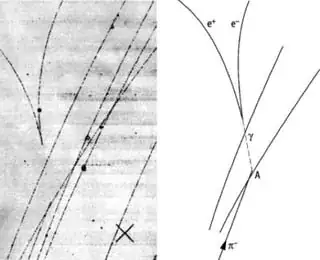
If the particle is not spinning around it’s axis, then how it gets deflected under an external field? And why this field does not get exhausted? Discovered was that the particles kinetic energy get exhausted and the particle emits EM radiation during its deflection (which is an acceleration of course). In detail, the particle emits photons if it is under the influence of an external magnetic field and if the particle is in relative (and non-parallel] motion to this magnetic field. On the other side, the emission of photons is accompanied with a momentum, which decreases the kinetic energy of the subatomic particle. And deflects the particle in the case of the mentioned non-parallelity! Now we named the reason, the particle gets deflected, the intrinsic spin is nothing as the particles magnetic dipole moment, which gets aligned and disaligned periodicaly, emitting photons and exhausting kinetic energy.
Rest mass is the intrinsic confined energy of a particle. The particle itself is elementary and does not physically contain internal energy (binding energy, elastic potential, vibrational, etc), and has this energy even at rest. The absolute magnitude of this energy cannot increase or decrease without changing the particle. The particle may have energy in addition to its rest mass, increasing its total energy linearly.
Would it therefore be correct to call spin "Rest angular momentum", in the same sense mass is "Rest energy". In what ways does this analogy break down?
Following the said above the spin is the deflection of a moving particle in an external magnetic field. In annihilation processes the spin simply disappears and it is not known to me that for the amount of resulting energy the spin is taken in account. So the answer is no.
Remark 1
Now educated people wach argue that the arrangement of electrons around nuclei is based on the intrinsic spin. Of course the idea about revolving electrons around nucleus is obsolet for a long time and the electrons are dislocated in some volumes around th nucleus. But the spin as a angular momentum is alive with a strength that it overshadow the role of the magnetic dipole moments of the electrons. They are responsible for the self-alignment of the electrons, which is expressed in the Pauli’s exclusion principle and the octet rule in chemistry.
Remark 2
Javier wrote:
Where it fails (or rather can't be applied) is in the case of massless particles, which don't have a rest frame. The relevant quantity is then not spin but helicity: the projection of angular momentum in the direction of momentum ...
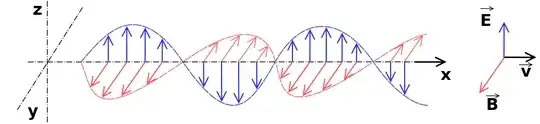
The spin of the photon comes from the simple fact that the photons electric and magnetic field components are fields with directions and the order they could follow one another could be only a lefthanded or a righthanded order:
N:S | +:- | S:N | -:+ or
S:N | +:- | N:S | -:+
For illustration see one of the two possibilities in this sketch from WP: