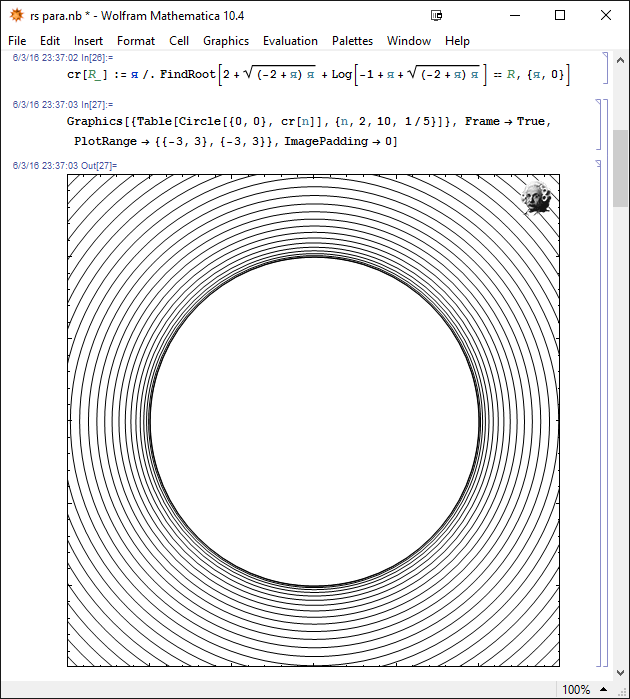
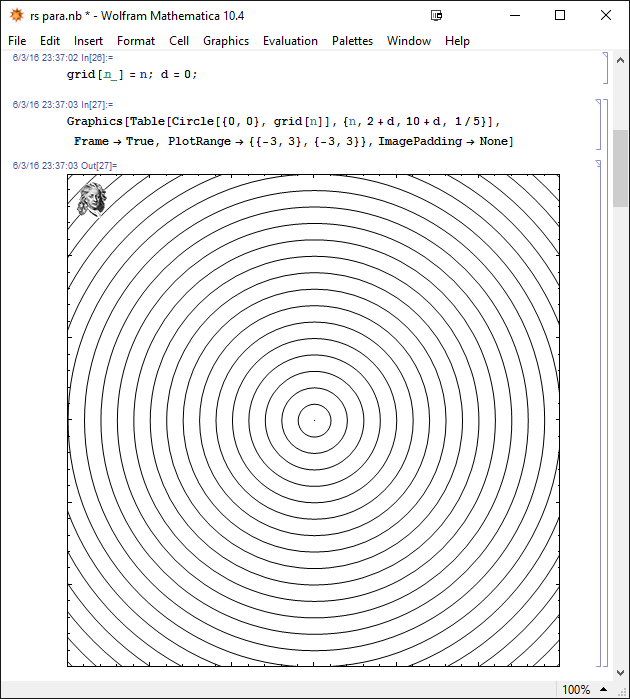
From the perspective of an outside observer there is neither space nor time inside the black hole, since the hole is pinched into the fabric of spacetime (compare Flamm's paraboloid to Newtonian space). Nothing ever falls into the black hole since it takes an infinite amount of coordinate time to reach the event horizon, so it can never fall through (see Susskind 1 and 2).
Because of this real black holes do not form in finite coordinate time, so in the system of an outside observer they will always stay collapsars which converge to a black hole, but never really become one because of the time dilation slowing down the process.
For the infalling observer who crosses the horizon in a finite proper time it means that he would see the whole future of the universe pass in one moment if hovering at the horizon, which would mean infinite blueshift.
So the formula you quoted in your post holds only for locally stationary observers and breaks down at the event horizon because nothing can stay locally stationary when the escape velocity is c. If the infalling observer is behind the horizon, he is no longer causally related to the outside and can't transform his own proper time to outer coordinate time any more, while every coordinate time the outside observer transforms into proper time will give the result that the falling observer has not yet reached the horizon.
That was the relativistic viewpoint; what really happens to the infalling observer when he crosses the horizon if you also take quantum mechanics into account is still subject of research and not yet solved.