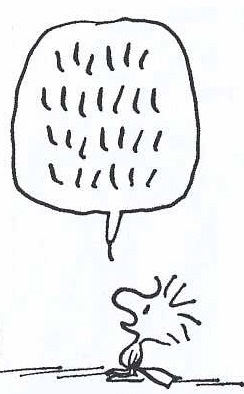
The way I've seen it done is that an initial part of the dialog is said untranslated, usually a phrase that is known by non-speakers in the audience's vernacular or reasonably should be. The dialog is translated into its English Language equivalent phrase in some kind of open/closing punctuation other than quotes (I've seen the Less than/greater thans used (<>) as well as parentheses and brackets ([]). Generally, parenteses may be avoided because in comics, they can be used to denote a comment said under one's breath.
Generally after the initial dialog is given a translation, it will receive a footnote (almost always denoted by a single asterisk following the dialog (*) which directs to a text box in the same panel that will include the phrase "Translated from (insert language here). -Ed." In this context "Ed" is short for "Editor" although it's rare for the actual editor actually had to do that. This is more because traditionally in comics, text boxes were used by the narrative voice in the gold and silver age of comics (neither Peter Parker nor Ben Parker originally said the phrase "With great power comes great responsibility" in Amazing Fantasy #15. Rather, it was said by the narrator of the Spider-Man story in the final text box in a sort of "Moral of the story" fashion.). In modern times, the text box increasingly became the place to put the thoughts of the protagonist of the story (or rather, the narrative voice in comics has shifted from third person to first). The "Ed" character came along to provide footnote info to the story and denote that the text is directly telling the readers something that can't always be gathered in reading due to the limitations of the medium. "Ed" will also appear to tell readers about a sequence of events that happened in a previous issue. A character might make a passing remark about the events of their last encounter, which was depicted in Title #115, which "Ed" will note in a footnote style rather than flashback if it's a passing mention and repeating the sequence would be a waste of story space.
One final note is that languages will typically get treated differently depending on the script used in the language. If the language uses the Latin alphabet, it typically is written as is. If it uses the Cyrillic alphabet, modern works will typically never transliterate the language to Latin alphabet in its initial writing, but will do so in comics published back when the computer wasn't as common (dietetics in Latin alphabet also follow this convention) because of the limitation of typewriters. Asian languages such as Chinese, Japanese, and Korean are more likely to be initially spelled out in romanized spelling because of the difficulty of the written characters for Western audiences with little experience. Typically if there is no intent to translate the language for the audience, then the Asian languages will be rendered with proper characters (such that the writers/editors understand the proper characters). The one exception is constructed-alphabet languages which in comics typically tend to have a one to one substitution for the Latin alphabet. D.C. Comics has two prominent features in Kryptonian (spoken by residents of Superman's home world) and Interlac (a lingua franca between alien species by the year 3000 and frequently used by the members of The Legion of Superheroes). In both of these languages, the dialog is still English but the dialog is rendered in the substitution alphabet. If you're nerdy enough to dig up your ciphers, you can read these without the translation, so "Ed" doesn't help you out here. And while the letters represent the same sounds as a Latin alphabet, in story dialog does note they are not spoken anything like English (dialog from one of Superman's stories suggest that spoken Kryptonian sounds like Swedish... from a dock worker in Gotham City guessing... so not the best expert on linguistics). Interlac hasn't been given a proper voice and in universe is constructed on the basis that all aliens can produce those sounds (which seems dubious considering the Latin alphabet does not represent the same sounds among all languages that use it). Which... I'm no linguist but seems suspect as human languages exist that have fewer sounds (Hawaiian only has 12 sounds in the language, Japanese uses 22 and had to create characters to close the gap for loan words) and some languages have more sounds (the Cyrillic alphabet has 33 symbols to the Latin's 26). Typically the speakers of these languages only do so among themselves or in settings where they don't know any better and will switch to English when they realize. Certain substitution ciphers are only used for depictions of writing and never in dialog. In Star Wars comics, The Arabesh alphabet is only used for in universe written communication, since it's pronounced like English, so comics will render dialog for "common" in Latin alphabet. Klingon is similar in Star Trek comics with the added complication that written Klingon was never developed by the series, despite spoken Klingon being a very verbose conlang. The in universe written Klingon was developed to look like alien language... not to actually translate, so Klingon is always written in phonetic Latin alphabet. Uniquely, it was also designed to "sound alien" so uses common sounds that are rare in most Earth Languages and also uses capitalization as part of pronunciation guide lines. In these cases, written languages will show up in background scenery but not in.
One final note, although not comics, the British television show "'Allo 'Allo", a comedy series following a group of people in the French Resistance in WWII used accented English to denote language. The French characters all spoke English with French accent, the Germans spoke English with German accent, the English spoke with exaggerated English accent. While not consistent (the Germans would almost always speak with German accent to the French characters, who responded with French accent) when the language barrier was needed, the accent = language was enforced. What's more, the people who spoke the language poorly often added malaproposes to their dialog - an English spy who was aiding the resistance would often greet everyone with "Good Moaning" (good morning) and would note that he wasn't staying long and was merely "pissing through" and thought to "piss along some information" (passing through/passing along some information). The explanation here was that, as the series was set in rural France, the French speakers were using an obscure rural accent while most non-native speakers had learnt the Parisian accent - one of the English soldiers tries to communicate with the French characters and makes the same mistakes as the recurring spy, to the French characters' confusion. He then switches to English and tells his commander that he wished the spy character was there because the spy was the best French speaker he knew (the studio audience was in hysterics with this).