Suppose a boy is in a room with a bulb (no windows and other light sources). Now the boy ON's the bulb and OFFs it such that only one photon is released (hypothetical). Now the bulb is OFF. The photon should collide (elastically, so no loss in energy) with the walls and eventually after many collisions reach our eyes, the boy should be able to see the part of the wall with which the photon last collided. But this is not the case we don't see anything so what happened to the photon which was released?
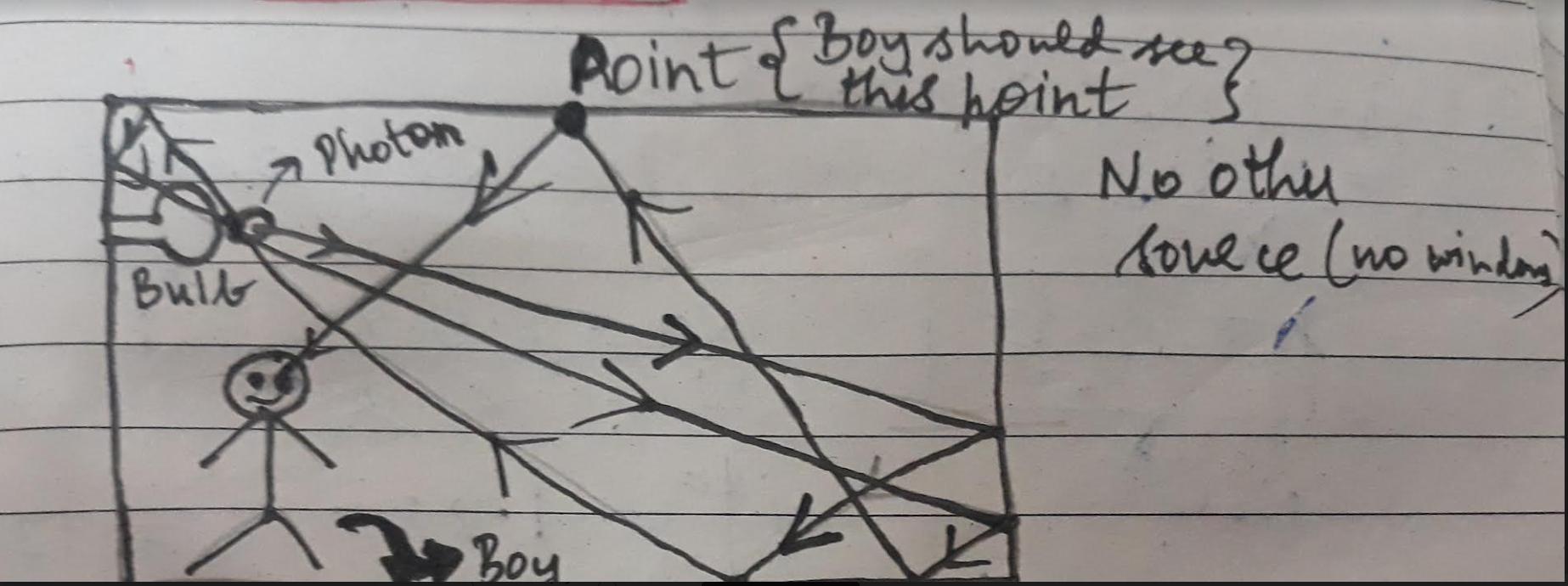 What happens if we replace the boy with a photon detector and repeat the above?
Edit: What happens if there are many photons and many people in the room (covering the whole room) then there is a slight probability of seeing light when the light got off, right?

