The question seems to point to the question of whether or not one can “turn on” the Unruh effect. This of course has some experimental relevance, for if we test it with highly accelerated particles then we do have to prepare a system where the acceleration is initiated. So this question is related to other funny problems, such as the physics which generates a black hole. The exact solution is an eternal solution, but an astrophysical black hole is generated by the implosion of a stellar core.
An accelerated observer will measure a thermal background of radiation on the Rindler chart, which defines wedges in flat spacetime. The Rindler wedge is a region an accelerated observer may completely causally interact with. Consider the Cartesian coordinate chart
$$
ds^2~=~-dT^2~+~dX^2~+~dY^2~+~dZ^2,
$$
for $0~<~X~<~\infty$ and $-X~<~T~<~X$. This slice of spacetime is a Rindler wedge, and the accelerated observer is on the transformed coordinates,
$$
T~=~x~\mathrm{sinh}(t),~X~=~x~\mathrm{cosh}(t),~y~=~y,~Z~=~z,
$$
so the Minkowski line element is
$$
ds^2~=~-x^2dt^2~+~dx^2~+~dy^2~+~dz^2,~~0~<~x~<~\infty,~-\infty~<~t,~y,~z~<~\infty.
$$
On the Rindler chart projections of null geodesics onto a spatial hypersurface are semicircular arcs. A highly accelerated observer will observe a laser beam bent into an arc, just as a projectile on this frame will move on a curve. A Killing vector defines a foliation of spatial surfaces orthogonal to static frames. This is a metric on these spatial surfaces according to a conformal transformation of the original metric, defined as the Fermat metric. For a fixed time $t~=~0$ the line element
$$
ds^2~=~g_{tt}dt^2~+~g_{ij}dx^idx^j,
$$
gives the Fermat line element
$$
d\sigma^2~=~{{g_{ij}}\over{g_{tt}}}dx^idx^j.
$$
The Killing vector $\xi_t~=~\partial_t$ defines a foliation of these surfaces so the static spacetime is a trivial vacuum solution to the Einstein field equation. The Fermat metric for Rindler observers is
$$
d\sigma^2~=~x^{-2}(dx^2~+~dy^2~+~dz^2),~0~<~x~<~\infty.~-\infty~<~\{y,~z\}~<~\infty,
$$
which is the hyperbolic three space ${\cal H}^3$ in the upper half of the space. The projection on $z~=~0$ is the Poincare half place ${\cal H}^2$ with semicircular geodesics. This space is a conformal map from the plane ${\mathbb R}^2$.
The hyperbolic geometry of the spacetime reduced to two dimensions gives the propagator
$$
G(X,~X^\prime)~=~-{1\over{4\pi^2}}{1\over{(X^\prime_0~-~X_0~-~i\epsilon)^2~-~(X^\prime_i~-~X_i)^2}}
$$
for coordinate index $i$ chosen. This propagator has the value
$$
G(X,~X^\prime)~=~-{1\over {16\pi^2(\alpha~+~1)}}\mathrm{cosech}^2(\Delta
t/\alpha~-~i\epsilon/\alpha),
$$
for $\alpha$ determined by the hyperbola $X^2~-~T^2~=~\alpha^2$. This propagator satisfies a harmonic condition $(\Delta~-~\lambda)G(X,~X^\prime)$ $=~\delta(X,~X^\prime)$, for $\lambda$ an eigenvalue. This propagator has a thermal or heat kernel interpretation. The thermal radiation is what the accelerated observer detects in the Rindler wedge.
This spacetime is very interesting, for it has an analogue with de Sitter and anti de Sitter spacetimes. Another characteristic is that this is eternal. The exact solution assumes a Rinder wedge for an accelerated mass or observer in Minkowski spacetime that is perpetual. This is analogous in a way to the eternal black hole solution, which is somewhat fictional. However, the eternal solution approximates very closely a final state of a black hole formed from a collapse. In a similar manner if one accelerates a particle to $a$ at a time much earlier than one performs and experiment then the exact theory above will serve as an approximation.
{\bf addendum}
I feel somewhat compelled to write an addendum to this.
Unruh radiation is something which is observed only by the accelerated observer. An inertial observer watching an accelerated mass would detect none of this radiation at all. The accelerated mass starts out at $v~=~-c~+~-\epsilon$ approaches the origin where the split horizon of the Rindler wedge exists at $v~-~0$ and then accelerates off to $v~=~c~-~\epsilon$ in the other direction. The horizon exists at a distance $d~=~a/c^2$, for $a$ the acceleration, from the accelerated mass. If you were on this frame this horizon would “appear” behind your direction of motion. It would be a region from which no information can be received.
Let us assume that the mass starts accelerating at a time $t~=~0$. This would be a case where only the upper half of the Rindler wedge exists. We now assume that the particle accelerates for a long period of time, so it approaches $v~=~c~=~\epsilon$. The motion asymptotes to a null line, and the path is half of a hyperbola. The absence of the bottom null asymptote will have less and less influence on what happens later on. This is a physical statement. First off if an inertial observer is moving at a velocity $u$ in the direction of the accelerated mass, this mass will appear to approach this observer and then recede. For $u$ large enough this accelerated mass would appear to come at this observer with a velocity $v’~=~-c~+~\delta$ where $\delta~>~\epsilon$, but not by “that much.” The accelerated mass will then approach this observer, stop and accelerate outwards. So “modulo” this small error, this situation is a good approximation to the eternal accelerated case.
The comparison to a black hole is with the Penrose diagram for the Schwarzschild metric. The physical black hole removes the bottom half of the diagram which corresponds to a “white hole.” The Rindler wedge is a near horizon approximation to a black hole. We do not expect any strange loss of Hawking radiation from a physical black hole to result from this
The particle horizon partitions regions of the Minkowski spacetime so the accelerated observer receives signals from only a portion of the spacetime. This causal partition means the accelerated observer measures the vacuum state as being a mixed state of thermal bosons. The partition removes a unitary description of the vacuum for the accelerated observer. So what the inertial observer witnesses as a pure vacuum states with zero temperature, the accelerated observer witnesses as a vacuum plus thermal distribution of radiation.
We now have the problem of detecting this. The inertial observer does not see the Unruh radiation. The accelerated observer does. The temperature is $T~\simeq~10^{-21}K/cm-sec^{-2}$ So you need a pretty serious acceleration to observe anything on that frame. Clearly a real observer can’t be on the frame. So not only do we need a start for the acceleration, we need a stop as well. The object on the accelerated frame will absorb this Unruh radiation, and if the inertial observer can “catch” the object its temperature may be measured. If this object is a Bose Einstein condensate of Ba ions that are accelerated enormously through a high $\vec E$ field region, say in a capacitor, the Unruh radiation might be enough to change the phase of the BEC.
I wrote a paper a fair number of years ago which got “honorable mention” for the Gravity Essay Prize where I proposed just this. Unfortunately nobody seemed interested in actually doing the experiment --- which is what I wrote this paper for!
Clearly we can’t have an eternal accelerated object, so we must work with approximate situations. However, some physical reasoning should strongly suggest that a removal of the $\infty$ or eternal aspects of the Unruh results can be made into a small perturbation.


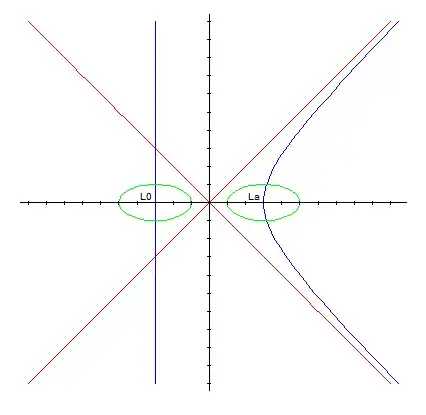 Because of the Reeh-Schlieder theorem, what is at space-like separation from the two laboratories is equally accessible to both (in the sense that both can get as close as they like to knowing what the statistics of measurement results would be everywhere in Minkowski space by making precise enough measurements in their local laboratory, on the assumption that the Wightman axioms hold or that the Haag-Kastler axioms hold). [It would have been better not to have drawn the two laboratories the same shape, because the shapes are not relevant to the Reeh-Schlieder argument, but it's uploaded now.]