What happens at the antenna is important, but you can't really understand the mechanism of radio reception until look look at the entire field-on-field interaction: the combination of the incident field from a distant transmitter, and the re-radiated field of the receiving antenna.
There is no reception, no absorption of power, unless current flows in the receiver. And when current flows in the receiver, it re-radiates as a transmitter. How is there a net absorption of power?
I have never seen this question clearly addressed anywhere except my own blogsite. Here is a link to my post, "The Crystal Radio". In the picture below, the parallel plane waves (coming from the left) representing the incident field, and the concentric circles representing the outgoing re-radiatede field:
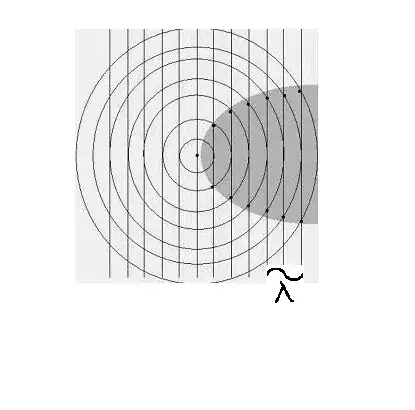 The shadow region behind the antenna (seen from above) represents the area where destructive interference takes place, meaning that power is removed from the incident wave and gathered in the antenna.
The absorption of power is acheived by controlling the phase of the re-radiatede filed so that it matches the incident field for optimum effect: this is called tuning the antenna. The power is then maximized by controlling the current so that the re-radiated power OUTSIDE the shadow zone does not overpower the absorbed zone. That is called "impedance matching".
If people understood half of what I have explained here about antennas, there would be a lot less nonsense being spread about things like the photo-electric effect.
DISCLAIMER: I am a recognized crackpot on this website whose answers are routinely and massively downvoted by people who know a lot more than me.


