In a capacitor the parallel plates of opposite charge create equal electric fields in opposite directions. We know field outside the capacitor is zero but inside the capacitor it is non zero. My question is if we assume zero field because of superposition of the two electric fields, why can't we do the same in between the two plates, because here also the fields are opposite to each other and hence will cancel? Basically, I want to know when we can use superposition principle and when we can't.
Asked
Active
Viewed 2,166 times


2 Answers
1
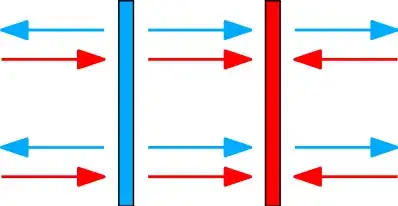
The principle of superposition is always applicable. The picture below shows to capacitor plates which are oppositely charged and their respective electric fields. The positively charged one (blue) has its electric field pointing outwards which the negatively charged plate (red) has it's field pointing inwards. As you can see, the superposition of both field will lead to zero field outside the capacitor plate (because there, the fields are pointing in opposite directions) while they will support each other in between the plates.

Jonas Greitemann
- 3,979
- 17
- 40
1
We can always use superposition principle. I will explain it in the case of capacitor.
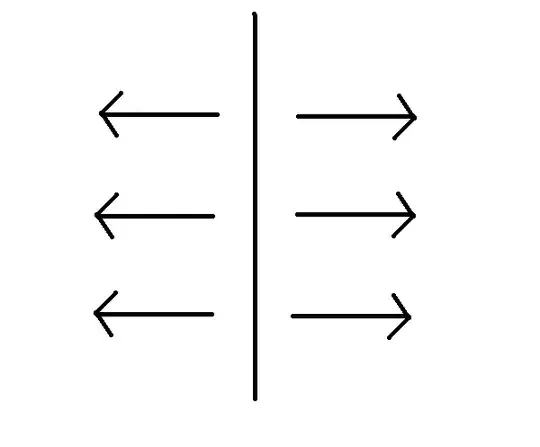
First you must understand that a positive plate will create an "out" electric field as showed in the picture. In the contrary, a negative plate will create an "in" electric field (the arrow is reversed).
If you draw the electric field of 2 opposite-charged plates placed near each other, you will have a picture like:
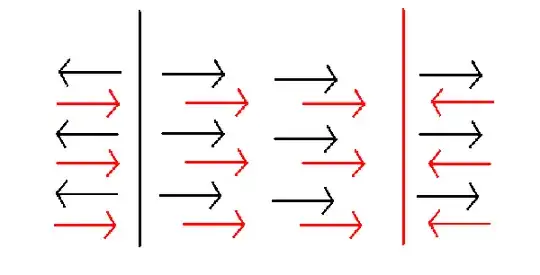
You see, outside the space between plates, the arrows exactly cancel each other, while inside that space, arrows of 2 plates have the same direction.

anonymous67
- 1,533