2

I have a hard time reconciling the distribution yield of a bond ETF and its average yield to maturity. For example, for this ETF the distribution yield is 1.8%, but the average weighted YTM is 4.5% (as I write this).

I understand DY to mean: the yearly return of a single dollar invested in one share. But assuming YTM is also a yearly rate, then which one am I actually earning, the 1.8% or the 4.5%? Does this difference stem from the fact that DY is backward looking while YTM is forward looking?

mxk
  • 299
  • 1
  • 7

2 Answers2

3

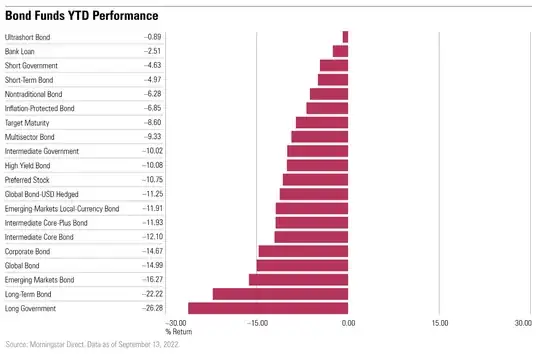
If you buy a bond ETF today, you will neither earn distribution yield nor YTM. Generally, you will not know what you will earn going forward. This is similar to stocks, although less volatile usually, although long term government bond ETFs were down almost 30% last year Morningstar.
enter image description here

I'd advice you to be very careful when you look at YTM of ETFs. This question and the associated answers highlights what the problem will be: almost no ETF holds bonds to maturity. This also holds for your example ETF which can only hold bonds with 1-3 years of maturity. Therefore, YTM will never be a value that the fund ever realizes (unless maybe by pure chance).

Distribution yield is backward looking, but it is at least based on what you actually received. That said, calculations vary from fund to fund, which makes it difficult to compare.

Overall, while bond ETFs are a quick and easy way to diversify, the actual returns you will get are volatile and unpredictable, just like almost all investments. If you want to be sure to get a certain yield, buy a single treasury bond and hold until maturity. All else will just expose you to price fluctuations.

AKdemy
  • 3,059
  • 1
  • 13
  • 34
2

Does this difference stem from the fact that DY is backward looking while YTM is forward looking?

Partly, but it also stems from the fact that the YTM is not always realized annually. YTM is a combination of the coupon return (that is typically distributed by the ETF) and price return, meaning if a bond is priced at a discount, then it will have an overall yield higher than the coupon rate. YTM is only realized when the bond is sold or matures, and part of that will be distributed as capital gains instead of "interest".

In other words, if you have an ETF that have an average yield of 5% but a DY of 3%, I would expect (all else being equal) for the value of the bonds (and hence the ETF) to rise 2% over time as well.

D Stanley
  • 145,656
  • 20
  • 333
  • 404