9

In the work shop manuals I've seen they tend to gives torque spec ranges such as 14 to 18 ft-lbs ( water pump bolts ) or 66 to 86 ft-lbs ( wheel lug nuts ).

In general, is any value in that range acceptable, or should one aim for the middle of the range to compensate for potential user or tool error?

Is there any real danger if one goes a few percent below or above these ranges?

Robert S. Barnes
  • 15,780
  • 72
  • 157
  • 249

4 Answers4

11

Those are the limits. Going above specified torque can damage the thread in the nut or engine block, or on the bolt. Especially aluminum and light metals are prone to failure due to bolts and nuts that are fastened too tight. Going below the specified torque means that the bolt or nut is not fastened good enough. It may come loose and that can bring a lot of trouble along with it. Any torque within the range is acceptable, but i'd aim at the highest specified torque, so that it's fastened good. If you know you'll be tightening and loosen the nut or bolt much, it's better to fasten it a bit less, to make the thread wear out less quick. Going a few Nm above the specified torque is probably not that much of a problem, since engineers take a safety margins in account in their design.

Joey
  • 505
  • 1
  • 4
  • 17
Bart
  • 2,964
  • 1
  • 13
  • 28
3

Your torque wrench is not 100% accurate, so aiming for the limits may end up over or under-torquing it. Best to go for near the middle of the range. A modest torque wrench might be accurate to +/-4% of indicated value over a the stated range.

So why the **** do they specify a range rather than simply give the nominal torque, you might well ask- the range gives you an idea of how close to the nominal that the engineers want you to get it. If they have specified a very narrow range, you may not be able to achieve it with the tools you have.

Of course if you over or under-torque the fastener you risk it coming loose, or breaking or stripping the fastener.

Take particular care to get the torque near right on parts that have relatively high torque for their size such as caliper bracket bolts, and especially on parts that are specifically stated to be one-time use (they are designed to stretch a certain amount when installed and must not be re-used).

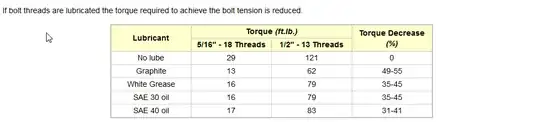
Also pay attention to whether lubrication is applied: enter image description here
-1

Torque to around the middle. If your bolt is a bit old, torquing it to the end of its range may put a bit more than it can handle.

If you worry about it flaling out, use locktight. http://www.ebay.com/itm/Great-Planes-GPMR6060-Pro-Medium-Blue-Thread-lock-Tight-Fast-Ship-wTrack-/172242632138?hash=item281a75fdca:g:GbkAAOSwv-NWZx2z

procrastilater
  • 290
  • 1
  • 7
-1

I have 37 years experience as a forklift technician. The 2 numbers are not a range but a wet or dry fastener torque. It is referred to as the K value. A dry fastener would require a lower torque and a wet requires a higher torque. The wet fastener would otherwise have a higher probability of loosening without the higher torque setting.

Ron
  • 1