3

This question is an expansion of Hacking devices to unlock features: Legal or not?

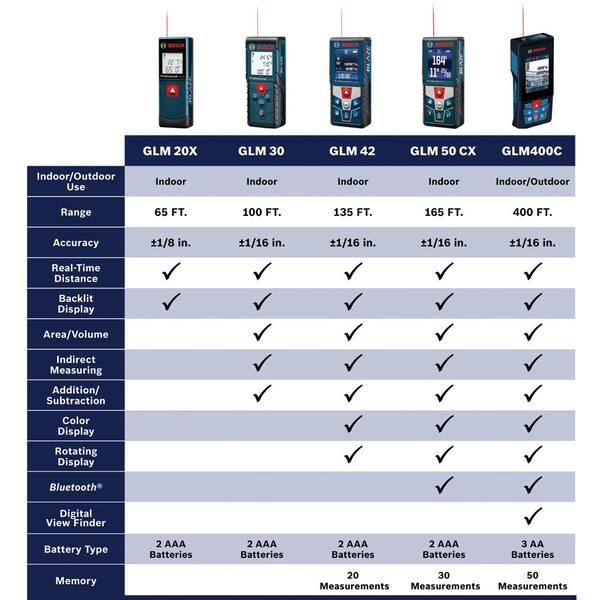
I'm currently in possession of a laser measurement tool called Bosch GLM20 which is their most basic model. As per the manufacturer website it doesn't support several features of more advanced models: area/volume, indirect measurement, addition/substraction. These features are purely implemented in software and don't require additional hardware to function.

Would DMCA prevent me from taking the device apart and flashing my own custom firmware on the device that supports these features? The code will only utilize open source software and my own code contributions, so Bosch would not be able to claim copyright. The device in question is luckily simple enough that this is feasible for one person to do.

On the one hand, I will modify software to get access to features I didn't pay for. On the other, I'm flashing my own software onto the device and not using any copyrighted code.

JonathanReez
  • 4,816
  • 4
  • 37
  • 70

3 Answers3

2

Yes, it's legal

In the US (and since 2020 ), there is no patent in a tangible product once that product has been sold. This is called the exhaustion of rights or first-sale doctrine. Once it's sold to you, it's yours.

So you can modify that object for your own use, to integrate it into another product, or even to onsell. You can't make another one from scratch.

As you say, there are no copyright implications because you are not using or modifying anyone else's code.

There are no DCMA implications because its your computer and you can give yourself permission to access it.

Dale M
  • 237,717
  • 18
  • 273
  • 546
0

It used to be illegal for sure. The DMCA originally included this phrase:

No person shall circumvent a technological measure that effectively controls access to a work protected under this act.

Then in 2010, the DMCA was amended. The current version exempts smartphones, tablets, and other all-purpose mobile computing devices from that clause. However, unauthorized modifications probably violate the products terms of use and void any warranties. It is also illegal to sell or distribute those modifications, or the tools used to make such modifications.

To your specific question, the suggested actions are unfortunately still illegal because the tool in question is not an all-purpose computer. Even if you don’t copy the original code, merely gaining access to it violates the DMCA.

Though between you and me, as long as you don’t distribute or sell any modifications, you’re probably ok ;)

Jack Edwards
  • 661
  • 1
  • 5
  • 9
0

I think it depends what those features are exactly. As you described them, it is probably legal given that Texas Instruments "dropped the stick" (circa 2009) and did not pursue in court people who posted their calculators' firmware keys after initially sending some DMCA notices.

On the other hand, Sony did pursue Hotz and friends in court (2011) and won TROs, while the case was eventually settled with Hotz promising not to hack any more Sony devices (ever). I suspect a substantive difference between the Sony and the TI case is that the firmware hack on the PS3 would have allowed pirated games to be played, whereas there was no such 3rd party software [piracy] at stake in the TI case, as far as I can tell.

Looking for loopholes
  • 3,815
  • 15
  • 34