47

As the main title says. I'm finding myself wondering about helicopters. The tail rotor is a vulnerable and key piece of equipment, especially on military helicopters. I know some helicopters instead use two main rotors (for example the KA-50).

Why not use a reaction wheel? The main engine could power the wheel, and it could be placed in an armored area and less vulnerable to fragmentation munition. Is it because any reaction wheel would be prohibitively large?

Qmechanic
  • 220,844

5 Answers5

90

You're talking about a device (in helicopters the tail fan imparting horizontal thrust) that counteracts the torque imparted on the main rotor (and therefore on the helicopter) by the surrounding air as the main rotor is dragged through the air.

You propose instead to impart an opposite torque through a reaction wheel. That would indeed impart an opposite torque for short lengths of time. However, you don't get a torque from spinning a reaction wheel at constant angular velocity but by changing and accelerating that angular velocity.

Now the torque imparted on the helicopter by the air through the main rotor is steady - or at least its of roughly constant direction. Therefore, to counter that torque, the reaction wheel would have to accelerated uniformly and indefinitely. Clearly this is impossible from an engineering standpoint.

You can also think of this from a conservation of angular momentum, without thinking about the origin of the torques. The air imparts a steady angular impulse to the helicopter. Therefore, the helicopter system's angular momentum must increase steadily (unless there's a countering torque from the tailfan). So either that angular momentum is the spinning of the helicopter's body (which is what we're trying to avoid) or that of the reaction wheel, whose angular momentum must be steadily increasing under the action of the angular impulse to the system.

Selene Routley
  • 90,184
  • 7
  • 198
  • 428
19

This is really an engineering question, imo, but I like applied physics.

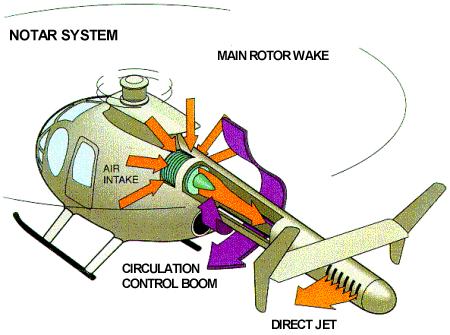
There is an alternative to reaction wheels, that is thrusters at the rear which allow the machine to get closer to trees, powerlines and general operate as safely as possible in confined space.

enter image description here

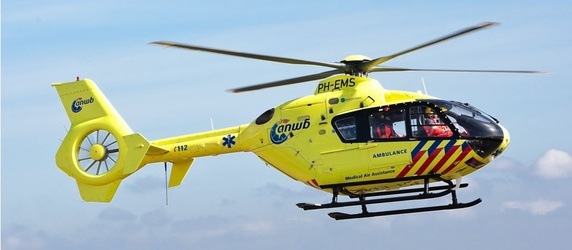
Also, many models of helicopters use ducted rear rotors, such as that shown below.

enter image description here

To counter the weight of the machine, and the torque of the main rotor of the helicopter, the reaction wheel, as I'm sure you know, would either have to be very heavy, or have a serious angular velocity, to achieve sufficient angular momentum and perform a useful stability restoring role.

The acid test for helicopter design is, in my opinion, do the military incorporate the ideas? If they don't, then there is probably a drawback to prevent further research.

EDIT The other answers regarding acceleration of the reaction wheel pretty much explain the line above, it's not just a drawback, it's impossible to implement. I should looked more into the mechanics of reaction wheels before answering. C'est la vie. END EDIT

9

As far as the laws of physics are concerned, you could do it if every so often you use the stored angular momentum in the flywheel to quickly reverse the direction of the main rotor and then start building up angular momentum in the other direction.

Disadvantages: Oh boy, where to start? You need symmetric, and thus probably less efficient, rotor blades, and a more complex swash plate arrangement. You need a main shaft and blade attachments that can transfer insane torques to the rotor during the reversal maneuver. You need complex arrangements to allow the motor exert a finely controlled torque on the flywheel over a wide range of speeds. And it's going to be a very exciting ride if the lift disappears for half a second every so often while the rotor reverses.

5

I consider this a very interesting idea, but clearly, you'd have to use the wheel as a gyroscope. Simply spinning up a wheel coaxial to the rotor would totally not achieve the goal, as elaborated by Rod Vance.

What you'd have to do instead is mount the wheel vertically. The wheel would spin at a high constant rate. Now, the rotor generates torque in a direction perpendicular to the gyroscope's angular momentum. Due to the way angular momentum adds up, the result would be a movement not so much in yaw, but in pitch/roll direction. You might now say this just replaces one problem with another, but not quite: unlike yaw, you can counteract pitch and roll with the main rotor alone, through the use of cyclic.

That alone would not be sufficient though: to really “transfer” torque between the directions, you need to actually change the rotation axis of the wheel. In other words, the helicopter would still spin, just slower! For some purposes this might actually be fine, at least in a drone helicopter. But for most applications, you would need a gimbal mechanism to change the wheel axis without spinning the helicopter body. This would make the construction quite a lot more complicated.

Quite likely, the whole thing is not practical, but it would definitely be interesting to try this concept out with a toy drone!

2

It is not possible to use a reaction wheel or any other means of resisting the torque by energy stored in a gyro as mentioned above. A mechanism like a rotating wheel or fly-wheel would work based on its angular inertia, J, which is directly proportional to its mass and the amount of torque it can save and deliver is not nealy enough for countering the main rotor's torque by even a few seconds for a mass of say 100 lbs wheel which is dead load. You need to accelerate it continuously because its available torque has already been spent to counter the rotor. Very soon you arrive at angular speeds which are beyond any reasonable technology.

Let's use the propeller of a Cessna 172 as an example of reaction wheel. It is approximately 50 lbs and 72 inch diameter (radius is exponentially related to J). At take-off or during some maneuvers it accelerates from 500 rpm to 2500 rpm in a couple of seconds and you'd expect a big torque that you have to deal with. True there is some amount of torque but even for me as a pilot who should anticipate it i don't feel much any thing. Just hear the roar of engine revving up.

The tail fan has easy controllable trust at small energy cost and can be geared to an automatic gearbox to work seamlessly with pitch and yaw controls and renders some self balancing inertia.

kamran
  • 1,655